Showing posts with label Emma J Lennox. Show all posts

Thursday, 16 October 2008

Interview: Mental health film and arts festival

Emma Lennox talks to the festival's film programmer, Belinda Arthur, and discovers that film can have both damaging and therapeutic effects.


It's the launch of the 2nd annual Mental Health Arts and Film festival and the sleek open spaces of Easterhouse performance centre, Platform, is buzzing with a milieu of people of different vocations. Usually when health care meets the arts it is for community based projects on a small scale, but the word 'community' is banned here today as the organisers emphasis the nationwide involvement for a rapidly growing festival. Soft rockers Idlewild have just unpacked their instruments for a two song acoustic set in front of camera crews and photographers and announcements have been made to promote the hundred plus events happening across Scotland between 1-19 October. “Things seem different today, not like yesterday...” croons lead singer, Roddy Woomble, and the lyrics to their 2002 hit You Held the World in Your Arms suddenly metamorphose into the progressive message that the festival is trying to inspire. As care workers and journalists flock towards the musicians for autographs and interviews, I'm in the corner of the café with Belinda Arthur, lead film coordinator, having a in depth discussion about Bambi.


Bambi's all about dealing with grief,” she tells me in all seriousness, before adding “in a way it should have an 18 certificate because of the stress it causes.”Arthur has an unending enthusiasm for raising awareness of the mental health plight, but at times, and perhaps for her own well being, this is balanced with moments of self conscious, tongue in cheek wit. The point she is making, however, is significant: films have an effect beyond entertainment, and Arthur hopes to address this with a programme of cinema which breaks through psychological boundaries. Arthur's job has been to consider the movies which fit the criteria for exploring and de-stigmatising mental health issues. It was a tough selection process, and to help, Arthur coordinated a panel of film programmers from the Edinburgh Filmhouse and a consultant psychiatrist in London. Sadly everyone's favourite orphan deer didn't make the cut, but Finding Nemo and Madagascar did. “Those films weren't my choice,” she admits ruefully, “but without being too schmaltzy about it they involve fundamental life lessons and values which helps kids to learn and articulate their feelings. The only thing is that Disney kind of over moralises,” she notes with an air of dissent, “Finding Nemo's ok, but I think I would rather have Bambi.”


Children's films aside, the programme is a diverse mix of feel good faire and hard hitting social drama. There are two musical biographies; Johnny Cash in San Quentin (1969), and Joy Division (2008) both of which portray the lives of the troubled musicians and their influential careers. Ken Loach has a showcase of two films from his distinct back catalogue; the Greenock set Sweet Sixteen (2002) and landmark BBC film Cathy Come Home (1966) which led to the formation of the charity Shelter. Recent releases Lars and the Real Girl (2007) and Little Miss Sunshine (pictured, 2006) bring some quirky silliness to proceedings whilst driving home a message of acceptance. “Unlike any other film festival we've got a real ethical responsibility,” Arthur explains, “and that's what's distinct about us. We're trying to give out a real positive message. Every film we choose goes through a really rigorous process to make sure that we can contextualise for discussions afterwards.”

It's not just a question of being politically correct, Arthur and her panel have had to look at cinema with heightened awareness of the broad spectrum of individual and political problems caused by health issues. Depression and anxiety are just two forms of mental illness which affects one in four people a year according to a National Statistics report in 2001 and a Samaritans 2002 report reveals that the UK has the highest rate of self harm in Europe at 400 per 10,000 of the population. It's an invisible plight, but it profoundly affects all communities in both personal and social aspects. “Basically I haven't been to the pictures in the last year without thinking, 'is there a mental health angle to this?” says Arthur of her mammoth task of finding films with the right tone and expression. “We've had real, serious arguments over it. But it was interesting because we had a multitude of opinion; some people had the knowledge of dealing with mental health directly, or working in social services, and some came from an academic film background. We'd all fight about what's exploitative and what's not.”

Arthur's biggest motivation, she tells me, is tackling stigma, “a lot of people say that it’s more affecting than the affliction itself,” she states, but aren't Hollywood movies more of a hindrance than a help? “Most films have made things worse,” Arthur is quick to agree, “just about any horror movie has a psycho in it and they've all been labelled as nutters or crazy. Its absolutely horrendous, but the trouble is they're so popular” In recent years trends of 'psychopaths' have taken more exaggerated characterisations, whilst using terminology that is pseudo scientific. Among the paranoid schizophrenics and bi polar protagonists is Heath Ledger's Joker in the second highest grossing film of all time, The Dark Knight. Batman couldn't kill an ill man though; instead he tells the Joker he wants to lock him up in a padded cell forever. “Maybe we can share one,” quips the Joker, “They'll be doubling up, the rate this city's inhabitants are losing their minds.” Nobody expects a comic book adventure with super villains and millionaire heroes to be sensitive to real life problems, but the joker's “why so serious?” brand of insanity certainly adds to popular misconceptions. “I don't want to be the person to burst people’s balloons,” says Arthur, perhaps aware of being unpopular, “but we’re on the side of those experiencing something distressing, to try and encourage them to get help. We’re not here to make it easy for people who are prepared to continue to stigmatise.”

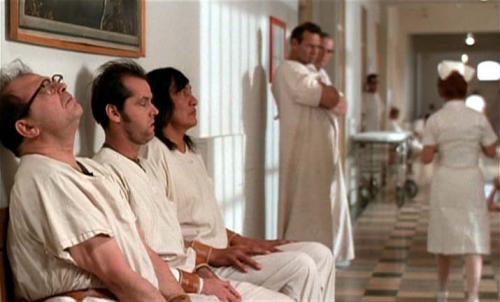
Other films which have incurred Arthur's categorical wrath are films which construe a connection between mental health and crime and she shoots down my own suggestion of the James Stewart classic Harvey (1950), for inferring the magic is real in the denouement. “We’ve avoided the obvious with One Flew Over the Cuckoo’s Nest.” adds Arthur “I’ve got real issues with that film.” The 1975 Jack Nicholson hit, directed by Milos Foreman depicts exactly the kind of padded cell Batman hopes to incarcerate the Joker in and it's the depictions of the inhabitants which Arthur protests. “If you were sitting in that audience, feeling really at the end of your tether, and you see people portrayed as dribbling and inarticulate or in blank catatonic states, you'd naturally be less inclined to look for help.” What's on screen can foster negative reactions but identity has always been a powerful motivator in cinema for the audience to connect to a story. A positive comparison between the viewer and characters can have a cathartic effect. “It's the same when you listen to music and you think, oh my god that's what I'm going through.” says Arthur, revealing “when I was young and tortured I would listen to the Smiths and think, oh man, someone else knows how I feel! That's what I think you get with watching films, that kind of recognition.”
For Arthur, the context of the screening makes all the difference and the Mental Health Festival is keen to provide open spaces for discussion. “It's still about what happens after, rather than what the films actually say.” Arthur explains, “it's about the meaning that people take away from it, for them to learn something, or hear people talk about something that they've never talked about. We try and be a forum for them to do that.” Since last year the film section of the festival has increased from six events to thirty with filmmakers and charity organisations on hand to discuss the finer points of the portrayals in post screening talks. There's still scope for expansion and with a topic as endlessly fascinating as the human psyche, Arthur is full of potential ideas. “I would like to do a series of films as 'reel therapy' So maybe next year we do five or six films that are absolutely renowned to make your heart sing. That's for when the festival grows in confidence.”

After all the viewing Arthur has done with other people in mind, I'm keen to find out what film makes this self confessed film buff jump for joy. It turns out to be a black and white classic, notorious for its eye watering, punch in the gut conclusion. “I watched Brief Encounter the other day and even though it's really emotional, I just sat there with a huge grin on my face,” she says, her face beaming just at the thought of it “Even at the end, when they separate, it's just beautifully acted, beautifully shot, everything about it's just...” Arthur gesticulates, eager to express her love of the cinematic experience, but is lost for words. In a way she has just summed up the medium which perplexes the senses but can touch the mind in inexplicable and powerful ways.


For more information: http://mentalhealthfestival.dreamhosters.com

Sunday, 21 September 2008

Nairn and the cinema of nightmares

A cinema travelogue by Emma Lennox, who tries not to have a personal epiphany on her magical voyage to the much hyped Ballerina Ballroom Cinema of Dreams film festival.

Standing bedraggled in an empty street in Nairn, 16 miles north of Inverness and five hours from home, I looked at the pretty flowerbeds of the coastal Highland town and despaired. It was horrifyingly quaint. The sky was pressing upon my brow with burgeoning clouds and my head still ached in rhythm to the rails. I wondered why I was here; caught between the darkened heavens and gable ended homes. It had almost been a subconscious decision; whispers of a happening had blown around for months and sure enough, here it was; the Ballerina Ballroom Cinema of Dreams; an experimental day dream from the minds of Hollywood actress and local, Tilda Swinton, along with cinema know all, Mark Cousins. I had arrived for the tail end of the eight and a half day festival, to muse in the glowing projection of art, thoughts, ideals and beauty. But now the idea felt incongruous to the reality. Nothing as grungy and bohemian as an auteur's ego should be exposed in this austere setting. Children in identical blue sweaters spilled onto the streets beside me, a pre-fab house passed by on the back of a lorry ominously trailed by an ambulance, silently intoning us to bring out the dead. It was like the Truman Show; everything had its place and even life and death came pre packaged. The only litter on the streets was me; a lonely, disturbed journalist in the land of Oz, I skipped down the street to find the Ballerina Ballroom of dreams.


It was a Friday night and as the temperature dropped, the pubs prepared for the dead end drunkenness that fuels small town life. The Ballerina Ballroom was located at the end of a gauntlet of pubs, chip shops and bookies and already a long queue had formed. The locals were easy to spot; they had smaller versions of themselves attached to their hems and they smelled of home baking and village fairs. There were rumours that tickets had been selling out daily and it was in the grip of this fear, the gut churning thought that the dream would shatter before it even began, that I raced a complete stranger to the end of the line. I was a selfish urbanite, but there were others; they were the ones with square eyes from too much staring at laptop screens on a lonely night. They were the jittery ones lost without the intravenous media culture of multiplexes, DVDs, downloads, downpours, ipods, iphones, iporn, youtube, myface, needless, wireless, dot com pirates of the 21st century. This was a society where no citizen was more than half an hour from watching Singing in the Rain at any time, any place, and yet I had travelled 193 miles to watch it for the fourth time in an emaciated building gilded with the beard of a fortified William Shakespeare. The festival website said 'let's hope it rains after the screening!' because the organisers wanted us to drown in Gene Kelly's smile and wash the technicolor into the streets of Nairn.

The critics had been raving; everyone loved a fairytale and this was a kind of Disney wonderland without the vermin. It all began with a beautiful, androgynous princess (Swinton) who was visited by a long haired angel (her 8 ½ year old son, Xavier) proposing the question ‘what did people dream like before cinema was invented?’ This was her answer; a showcase of classic cinema, curated by chivalrous industry friends and around £25,000 of her own fortune. Visitors came from all corners of the kingdom and beyond, bringing gifts of baked goods and their own chairs. This kingdom was known as Ramshackle, but it was a special kind of bank rolled, industry approved, professional Ramshackle. A sweet story, but I wasn’t convinced this pyjama party really answered any questions. Swinton and Cousins’ festival was born out of the dream to commune with outsiders in cinematic appreciation, to bond through collective consciousness. Was it possible that who you watched with effects how you see? Perhaps, but if dreaming was their metaphor, I couldn't help but reflect that at night we dream alone.

If only I had remembered to pack my naiveté, then maybe I could join in on the childish spirit they were trying to invoke. Unfortunately I had buried it at the age of 9, in a small cardboard box under a cherry blossom tree, next to the remains of my dead hamster. But middle aged Mark and Tilda seemed to be under the illusion that being a child was fun. Eight and a half, they claimed, was the best age to discover cinema, it just so happened to tie in with the title of a Fellini classic. I remember spending my days as an eight and a half year old, longing to be eighteen and a half. There was always an uneasy feeling that I was missing out on the good things in life, things I couldn't yet comprehend like war and periods. From my vantage point at the wrong end of the queue I could see a small town square where children were playing in the remainder of the dusk light. They were flinging themselves like lemmings off the walls above some dustbins. “Don't jump from there, or I'm telling ya, you'll die!” shouted one girl to an older boy. Death, she had threatened. It all seemed so serious; their little faces were deep set in joyless expressions of determination, they were only ever moments away from broken friendships, heart breaking taunts and years of insecure angst. This was not the freedom that adults imagined a child's luxury to be and yet the older a person became, the harder they would kick and scream to return to this blissful state of torment. Swinton and Cousins had created a selection to show off the vivacity of cinema to children, because they wanted to witness the birth of their cinematic intellects. Splice together my earliest film memories, however, and you would witness a terrifying, psychedelic montage of pink elephants, blue meanies, laughing dragons, flying monkeys, melting faces, and walking carpets. This was a cinema of nightmares, its images were created to scar and trick the mind. The best filmmakers like Fellini, Godard, Bergman, were the ones who could disconcert and manipulate their audience. They didn't make comfortable, pretty pictures, they wanted to change our perceptions and take us to dark places. Was Ramshackle ready for this dawn of darkness?

The festival wouldn’t have survived in the urban sprawl of the mean cities. Nairn was once the 'Brighton of Scotland' and the town still remained opulent yet dilapidated with dishevelled buildings and helter-skelter pillars and scrolls. The wealthy Victorians were ostentatious types and there was maybe something of their kitsch pride left in the Ballerina Ballroom's pomp and programming; The Singing Ringing Tree, The Adventures of Sherlock Homes, Murder Most Foul and Dames all conformed to a nostalgic kind of whimsy. It was a strangely empty and impractical notion on which to create a film festival, or to base any part of life around. Whimsy was warm and friendly, it could hold my hand, but it wasn't going to shorten my bank statement in my time of need. It couldn't smooth my furrowing brow, or filter my email inbox, or find the right change for the bus, or expand my shortening life, or peel an orange in one, or dry my sodden shoes. Just what exactly had whimsy ever done for me, or anybody else, except sell a few mobile phones and promote impossible lifestyles? I decided whimsy should be looked upon with suspicion, like the spindly legged gentleman who cries 'lollllleeeeee-pops' in Chitty Chitty Bang Bang. By the time I reached the front of the queue, Singing in the Rain had sold out. And as I skulked back to my floral, doll's house abode in petulant thought, it didn’t rain, it drizzled.

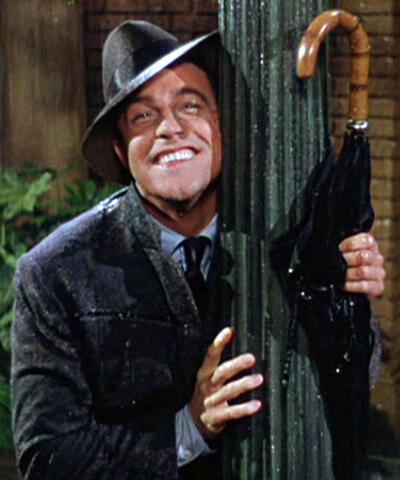
The Ballroom queues had a life of their own and another had appeared when I returned to retry for the 9:30 screening, this time it took the shape of a two pronged tongue. The artist/writer John Byrne squeezed through in tight waist coat and clipped goatee. He looked exactly like a portrait of John Byrne, by the artist John Byrne. The sense of occasion was palpable. The great tongue licked its lips and finally I entered the dragon and purchased a ticket. I had never imagined before what a highland opium den would look like, but this seemed to fit the picture. Chinese lanterns hung in rows of glowing red orbs, the walls were black and pink and the occasional lightening strike tore across them. A third of the floor was covered with the bodies of lackadaisical cinema goers, stretched out on scattered cushions. When the main lights were extinguished a spot light hit the wall and lulled above our heads. Inexplicably Morrisey's strangled voice filled the air with the Smiths' There is a Light That Never Goes Out and Swinton and Cousins were on their knees beside the screen, swaying gently to the music. So this is what it had come to, I thought as the film finally began, cinema was a legal high. All these kids on cushions were getting mashed on 1950s song and dance. Gotta dance, make 'em laugh, no, no, no, yes, yes, yes, I love you, I love you, I love you, I love you. Gene Kelly's great swinging arms pirouetting his body, as he contorted gravity with magnetic limbs and his immaculate smile. Everyone was clapping and cheering like it was vaudeville and special ballerina umbrellas spun in unison when the title track reached its climax. What a glorious feeling, I'm haaaa- pee again. When the camera took its final swoop and bow the crowd dissolved into whoops and excitement. The image flickered and died and the show was over. It was nice, it was pretty, I walked down the high street, through the midnight brawling drunks, with a smile on my face.

By morning pink fuchsias had been uprooted in flaccid, drunken rebellion, their decapitated petals scattered into a floral carpet, and trodden into the ground by the ever earnest Ballroom queue. The last film I was to see before my adventure was over was a short animation about a diabolical train journey entitled Mrs Tutli Putli. I felt a shiver of excitement when the children were asked to leave the room. Get out kids, it's adult time, I didn't do all this growing up just to baby sit your fragile little minds. I sat between a poet and a copywriter, “yes I do make a living from it” the poet said, because I had forgotten to ask. Mystery trains, ghost trains, strangers on a train, brief encounters, wrecks, disasters, passion and steam, the railway laid picaresque lines in the motion picture, but Mrs Tutli Putli never arrived at a destination, hers was a transformative journey. I thought about it on my own train ride home. How did people tell stories before travel was invented? Travelling, like cinema, was about the parable of the self, it was individualistic and ego centric. We could dream of coming together but the journey we had to face alone. Poor Mrs Tutli Putli, and her great, sparkling empathetic eyes, I could still see her searching the empty carriages of the high jacked train in the dead of night. The bad dreams had returned. What if I was to suffer the same fate as Mrs Tutli Putli? After watching the 17 minute short, I wasn't exactly sure what that fate was, but it was dark and disturbing; a deeply unsettling synthesis of inner terror and existential angst. She was alone, but in the presence of living movement, propelling her onward and altering her physicality.


Through the train windows I observed unharvested fields and overflowing rivers of the penultimate Summer days, fit to burst and give way to the sodden afterbirth of early autumn. The farmers were out with their contraptions, ready to pierce their livelihood through the heart. We travelled through the towns and I saw the imperial vestiges of the Victorian dream, its rusty girders like giant hands gripping the rail stations of Inverness, Perth and Stirling. Finally we arrived into the post industrial hubris that was Glasgow, with its shattered buildings and techno spaces. I felt safe. I was back in the gruel of civilisation, and back to watching comfortable nightmares on my 15 inch laptop.


Sunday, 7 September 2008

Fictional Writers


"All writers are vain, selfish and lazy, and at the very bottom of their motives lies a mystery. Writing a book is a long, exhausting struggle, like a long bout of some painful illness. One would never undertake such a thing if one were not driven by some demon whom one can neither resist nor understand." George Orwell

Writer's block should be a black hole for the arts but for movies it's when the ideas stop flowing that the story really begins. Here, Montage investigates films featuring those most fragile souls, the writer, whose on screen portrayals allow us all to wade the creative quagmire. Writing is not a visually exciting activity but take a closer look and there may be something mysterious stirring in there, breaking old boundaries and opening up social, psychological and philosophical discourse. Authors, however, are hardly pleasantly identifiable creatures, so how engaging are these movie versions of the age old creative stump? And does the bigger the struggle, the better the art make? By applying a scientific marking system these reviews correlates struggle with achievement in order to see how the movies adapt this unadaptable creative jinx.


Adaptation (2002)

Director: Spike Jonze

Screenwriter: Charlie Kaufman

Fat, bald, old, sweaty, repugnant Charlie Kaufman (Nicholas Cage) is struggling to adapt an orchid based novel in his pseudo- autobiographical, ouroboros narrative. There is nothing clever about describing Adaptation, because Kaufman so carefully writes exactly what he's doing into the screenplay. Some critics might say he's self indulgent, narcissistic, pathetic, and that he can't write, but they would only be quoting him directly. Kaufman explores the pain of adaptation; the writer's guilt of thieving from beauty and life, and suggests that creation is an act of destruction of everything you hold close, including yourself. It's all done with enough wit and self deprecation to distract from the literary onanism and Kaufman has another trick up his sleeve; a maguffin in the form of a conflicting twin brother, Donald (also Nicholas Cage). Donald is full of vitality, optimism, success and Hollywood industry jargon. He also proves Adaptations most mutable character, bringing the endless rumination to a poignant conclusion of self worth. But the car chases and killer crocodiles aren't fooling anybody, as Kaufman takes the sublime into the ridiculous and pins a climax on the tale in erroneously grand style. He knows we know, however you can just about see him wink through the type font.

Writer's success: One Screenplay (produced, award winning)

Writer's futility: 6/10

Film: 7/10


Ask the Dust (2006)

Director: Robert Towne

Screenwriter: Robert Towne

Adapted from a novel by John Fante

With the star power of Colin Farrel and Salma Hayak, it's surprising that Ask the Dust disappeared into the Californian desert as rapidly as it did. Based on the superb book of the same name, it is written by Bukowski's favourite author, John Fante. Arturo Bandini, (Fante's alter ego played by Farrel), is an autobiographical mix of naive hope and worldly bitterness in one strangely endearing character. The novel is a simple anxious tale spun from writer's block and unrequited love for good measure and is characterised by Fante's lyrical and bone dry humour; “an idea floated harmlessly through the room...it only wanted to help me, dear little bird. But I would strike at it, hammer it out across the keyboard, and it would die on my hands.” This is a writer's tale for writers, so the adaptation should have been safe in Hollywood screen writing veteran, Robert Towne's typewriter. Many passages of text are imported directly into voice over, but Towne's direction fails to capture the aimlessness of the novel. The director isn't daring enough, and in the resolution Fante's cynicism is replaced with Hollywood romance, which sadly only blunts the acute struggle of the fantastic and self pitying Arturo Bandini.

Writer's success: two short stories (published), one novel (published)

writer's futility: 3/10

Film: 5/10


The Lost Weekend (1945)

Director: Billy Wilder

Screenwriter: Charles Brackett, Billy Wilder

Adapted from a novel by Charles R

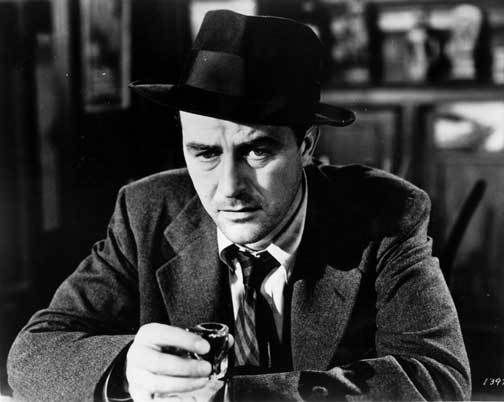
The Lost Weekend, based on the novel by Charles R Jackson was both progressive and symptomatic of its time. The narrative, which revolves around Don Birnam (Ray Milland) and his five day binge, was the first mainstream movie to approach the subject of alcoholism with any sophistication. The writer's block suffered by Birnam, however, was an adaptation from the original character device centred on a homosexual encounter. Hollywood can only take one taboo at a time, it seems. In terms of creativity, alcohol is Birnam's nectar and his poison; he explains “It pickles my kidneys, yeah, but what does it do to the mind? It tosses the sandbags overboard so the balloon can soar...” Unfortunately Birnam is completely unable to start his alcohol inspired novel, 'The Bottle,' managing only to complete the title page (in Hollywood writers start from the beginning). It culminates with Birnam's imagination revolting against him and torturing his soul with caustic futility. What is horrifying isn't the strange, small creatures that Birnam hallucinates, or the sound of the loopy theremin on an unsettling soundtrack, it's the sight of a grown man, screaming at the top of his lungs in soul destroying terror.

Writer's success: one short story (published), one suicide note.

Writer's futility: 10/10

Film: 10/10


Barton Fink (1991)

Directed and written by the Coen Brothers

Inspired by the Coen brothers own writer's block whilst completing the screen play for Miller's Crossing, Barton Fink is an example of uninhibited writing anxiety. The narrative is a rogue's gallery of typical Coen brother grotesques; manipulative, overbearing power merchants, warped, drunken has-beens and smart mouthed police detectives. Playwright and 'man of the people', Barton Fink (John Turturro) doesn't escape parody either, he is a self righteous, arrogant moron, whose masterpiece screen play, when eventually finished, is a plagiarised mess of his hit play, (tapping into an age old writer's fear that there's only one good idea in their heads).

The Coen brothers create this cautionary tale of selling out with fire and brimstone subtlety. The 1940s time period allows some satirical swiping at Hollywood's anti-originality strangle hold on the arts, in particular its treatment of writers who have flocked there with burning ambitions. “Jesus, throw a rock in here and you'll hit one” informs Fink's director on the presence of scribes in the room, “and do me a favour, Fink, throw it hard.

Barton Fink is an envisioned hell of the tormented mind, personified by next door neighbour/ friendly psychopath, Mad Mundtz (John Goodman). This is the Coen's torture writ large across the screen and proof that a blocked imagination can unleash demons.

Writer's success: One play (produced, 4* in Herald), one script (forever unproduced)

Writer's futility: 8/10

Film: 8/10


The Shining (1980)

Director: Stanley Kubrick

Screenwriter: Diane Johnson, Stanley Kubrick

Adapted from a novel by Stephen King

Beware the abode of the blocked writer, for within madness lies. And it doesn’t get any more crazy than Jack Nicholson, complete with happy hysteria, trying to bash someone’s brains in. Jack is Jack Torrance, a novelist, who packs his family up to the snowy Colorado mountains to become caretaker in residence at the closed Overlook Hotel. Stanley Kubrick wastes no time in establishing the foreboding tone; searing violin strings and violent percussion punctuates the most ordinary establishing scenes with impending doom. Kubrick coldly isolates each individual sound in the silent hotel, from Jack’s bouncing tennis ball, to young Danny (Danny Lloyd)‘s trundling tricycle wheels. Everything is a sinister distraction to keep the writer in terrible limbo.

The adaptation of Stephen King’s horror makes many alterations (controversially according to the author) and one of the new inclusions, besides corridors of blood and Johnny Carson impersonations, is Jack's writer’s block. Jack also has problems with alcohol but it's his frustration which first fractures his mind and leads him back to the bar. As the stedicam floats around the hollow hotel Jack’s decent into psychosis seems all the more slippery and perverse. It’s only when wife Wendy (Shelly Duvall) discovers Jack’s manuscript, a repetative story about a boy named Jack, that we see into the darkness. As the pages fall through a terrified Wendy’s fingers, the same sentence appearsing again and again, it’s as visually disturbing as the contents of room 237. Not only is her husband a murderous fiend, he’s a horrible writer.

Writer’s success: one sentence (approx 10,000 times)

Writer’s futility: 10/10

Film: 10/10


Monday, 30 June 2008

EIFF Winner: Somers Town- Review by Emma Lennox

Michael Powell Award for Best New British Feature Film
Director: Shane Meadows

Screenwriter: Paul Fraser
Runtime: 75 mins

Shane Meadows follows up the fiery This is England with a tale of two unlikely lads in this comical and endearing tale of misfit youth. Thomas Turgoose takes on his second role for the director, and although he's grown in height, he's still a cheeky wee bastard. Playing teen drifter, Tomo, Turgoose is as compelling to watch as ever; full of naive and arrogant charm, which perfectly contrasts his co-lead, Piotr Jagiello as the quietly suffering Polish immigrant, Marek.

Although softly raising issues of immigration and teen culture, Meadows is aiming for a surprisingly feel good narrative in his typical style of improvisation and hand-held immediacy. A folksy soundtrack and black and white palette complete the aesthetic, however the London setting doesn't hold the same inclusive energy as Meadow's home town films. Light, but not light weight, Somers Town is an enjoyable escapade.


The Jury citation read: “It is a great pleasure to recognise Somers Town as the freshest, most imaginative, maverick work deserving of the Michael Powell Award. After viewing an impressive selection of films and a long deliberation we the Jury unanimously agreed that the award would go to Somers Town.”


This year the Michael Powell Award was significantly increased from £5000 to £20,000.

EIFF Winner: Good Dick- Review by Emma Lennox


Skillset New Director Award
Director: Marianna Palka
Screenwriter: Marianna Palka
Runtime: 86 mins

A video store clerk falling in love with his porn obsessed customer, doesn't nearly sum up this quirky, bemusing and overall original feature which is written, directed and starring the same wonder woman, Marianna Palka. Her unnamed character is a moody, bitter and mysterious woman who only ventures out into her home of LA to rent porn. Jason Ritter plays the unnamed love fool, who attempts to get to know her through dubious means. Tension is racked up between them with biting dialogue (“I don't like your face, you're disgusting to me,” “Well I know you find me attractive,” “Not at all.”) and physical, comedic performances. Even the video store diversions are filled out with rounded characters and entertaining banter with a male perspective including one video nerd's advice on finding the clitoris “it's the thing that looks like the flux capacitor”. Despite plenty of 'pussy' references, Good Dick never seems contrite, and is instead underpinned by a deeper psychological context; by turns a funny and disturbing view of sexual relations. Altogether a blistering and nuanced debut from Palka, Good Dick manages to be both edgy and warm hearted.

EIFF Winner: Encounters at the End of the World- Review by Emma Lennox


Best Documentary Award

Director: Werner Herzog
Producer: Henry Kaiser
Runtime: 99 mins

It sounds like the title of an H.G Wells sci-fi flick, and in reality, Werner Herzog's South pole documentary is just as sublimely fantastical. Herzog's narration-in his typically earnest, deutsch tones- is surreal enough; he even wisecracks about “fluffy penguins” and goat riding monkeys, but it is that altogether stranger species of the Antarctic scientist which has caught the documentarian's eye. These are travellers who have “jumped off the margins of the map”, and create a bizarre collection of people who occasionally wear buckets on their heads or try to grasp sub atomic particles from other plains of existence. Much of the imagery is bizarre or alien such as the view of three goggled scientists, lying ear to ice on the frozen Antarctic sea, listening to seals beneath. Seals in water, it turns out, sound like they are singing Doctor Who's theme tune and this is just one of many unlikely discoveries in the film. Herzog is only able to scratch the surface of everything, taking a narrower, personal point of view but through the compelling stories and inspiring visuals, he reveals that sometimes in science, reality is stranger than fiction.


Chair of the award jury, Seamus McGarvey stated their reasons for awarding Herzog : "Herzog uses his camera as a writer might use a pen, making notes as he goes along, allowing the audience to share the discoveries he makes through the lens. Many of the shortlisted films confront important issues in the world today. Encounters at the End of the World approaches equally important issues but draws its authority from its quiet assurance. It is a challenging film and reveals, sometimes obliquely, sometimes directly, profound insights into the state we're in. We felt it was a celebration of documentary filmmaking that thoroughly deserves to win the 2008 Edinburgh International Film Festival Best Documentary Award.”

Saturday, 28 June 2008

EIFF: A Film With Me In It- Review by Emma Lennox

Director: Ian Fitzgibbon
Writer: Mark Doherty
Running Time: 88 mins
Screening: 29 June, 19:00 Cineworld

In the early 90s 'dark comedy' became a genre all of its own. It encompassed most Brit flicks like Shallow Grave, The Young Poisoner's Handbook (both 1995) to off beat American indies with a cavalier attitude to death such as Reservoir Dogs (1992) and American Beauty (1999). Yet there followed a spate of attempts by newbie filmmakers which were neither serious enough to be called simply 'dark' nor funny enough to be acclaimed 'comedy'. So well worn is the term, that it's with great journalistic hesitancy that this reviewer describes A Film With Me In It as a superb dark comedy.

Written by and starring Mark Doherty, the plot is kept to bare minimum of requirements; an out of work actor (Mark) who is down on his luck, lives in a crumbling Dublin apartment with soon to be ex-girlfriend, Sally. He has a disabled brother, David, (Doherty's brother in real life, stand up comedian David O'Doherty,) a horrible landlord (Keith Allen) and a shambolic friend, Pierce (Dylan Moran). It starts as a humorous struggling artist's tale of poverty, rejection and endearing naivete, and it turns into a twisted and farcical story of unbelievable mishap. Unlike most dark comedies, the comedy momentum isn't slowed down by the body count, but gets increasingly hysterical as it rises.

Doherty's performance plays up to his suitably hang dog features, and Moran works on the persona of drunk bohemian as seen in various characters including Bernard in TV series, Black Books. Moran's film career has been a little ill fitting as the industry tries to fit a peg shaped comedian into some unfunny square films, but here Moran's role plays to his strengths of the philosophic but embittered neerdowell character.

As Mark and Pierce are both rejects of the harsh movie business, the narrative has a knowing wit about it, with laughable insights into the industry and contrived plots. The set ups and pay offs are all successfully handled by director Ian Fitzgibbon, and one suspects the casting of Shallow Grave's Keith Allen for cadaver duties is a sly wink at the British hit. A Film with Me in it is an economically told story which laughs in the face of misfortune and at best recalls those darkest of funnies; the Ealing comedy.


Tuesday, 3 June 2008

Remembering Ousmane Sembène- Xala Review- by Emma J Lennox

In June last year the world said goodbye to one of the greatest film directors ever to be forgotten by the Bafta memorial list. Ousmane Sembène died at the age of 84 having laid the foundation of African cinema; altering both the perspectives of African people and perceptions of the outside world. Yet although there are many books dedicated to the man and his beliefs, politics and critical theories, in the UK it is nearly impossible to find his films on DVD. In the last few months cinema has lost many of its talents, some from their prime of life, but all glorified in relatively short time by the DVD box set special. But to indulge in the humanist works such as, Mandabi (1968), Ceddo (1977) and Moolaade (2004) Sembène fans will have to pay up for a region one special delivery. It seems for cinephiles hemmed in by UK coast lines, multiregion players are the way forward. To remember the achievements of the cultured novelist and filmmaker, Montage takes a look at Sembène's most critically acclaimed work, Xala (1975).

On the neo classic steps of Senegal's merchant bank, the regal busts of France’s colonial past are abandoned. Gone but not forgotten by the new socialist elite, the symbolic ornaments aren’t smashed or destroyed by their replacement masters; instead they are delicately picked up and quietly carried away. So begins the coup of Sembène’s political swipe at African bourgeois hypocrisy in the bitingly sardonic adaptation of his 1973 novel Xala. The title infers both the name of an impotence curse in the native Wolof tongue and Sembène’s symbol for the failings of African politics in a post colonial era.

Sembène has been a unique sub Saharan voice in literature and his novels O Pays, mon beau peuple (1957) and Les Bouts de Bois de Dieu (1960) have become international socialist classics with world wide critical acclaim. In 1963, aged 40, Sembèneturned to filmmaking to reach his home audience of largely illiterate and disenfranchised Africans. Having studied film at the Gorki studios in the Soviet Union, and lived in France during the height of the New Wave, Sembène confidently renders the politicised power of Russian montage with the immediecy of French verite`. Yet Sembène’s political observations aren’t didactic, his deliberate sense of irony and farcical examinations of class are as astute as Renoir or Godard.

This is evident in the first order of business for the newly appointed merchant bank members who are each given large amounts of cash in anonymous black briefcases. The red carpet rolls out and escorted cars line the streets; thus the transition to the familiar looking new order of society is complete.The narrative follows one successful businessman, 'El Hadji', (Thierno Leye) who brashly celebrates his new position and wealth by taking a third wife. Everybody has been invited to the reception, including wives one and two. This is the source for some domestic satire because although El Hadji is the head of three households, he finds himself considerably belittled by his spouses and daughters and their conflicting views on money and tradition. After he is unable to satisfy his virgin bride, El Hadji is told he suffers from the xala and his implied emasculation is physically realised. A wedding present of a brand new car, beautifully presented with bows and ribbons remains in pristine condition throughout the film, often suffering longing glances from characters and camera; similar to the new bride, it is a symbol of the country's untouched potential.

Strong female portrayal is a recurring theme for Sembène who says; “as far as I'm concerned Africa is a woman,” in Xala the women are the centre piece of his vision. The impotence of the xala emphasises not only the weakness of man's inabilities but also the beauty of his desired object; for El Hadji it is a woman, for Sembène it's Senegal. Offering a virile form of social status, the female characters in Xala represent various aspects of African culture, past, present and future. The first wife, Adja (Seune Samb), is the martiarch, she dresses in traditional clothing, chews on a stick and reserves the respect and rights of an elder. The younger, fashionable second wife, Oumi (Younouss Seye), depicts an upwardly mobile class movement and relishes material wealth with painted fingernails. Educated modernist daughter, Rama (Myriam Niang), negates the official French language for Wolof and is the clear inspiration to the independent Senegal. El Hadji's xala not only makes him unable to compensate these women, it represents the failure of self serving men to satisfy the needs of their country and their people.

The numerous references and layers to Sembène's narrative mean his style is often overlooked by those critiquing his politics. The cinema verite style of post war Europe is relected in the street level filming of Xala and Sembène shoots with a simple camera style of lingering long shots which slowly absorb the atmosphere of the land and the people. The story unfolds through mise en scene instead of edits which lends itself to a removed appreciation of events with the audience, like the camera, as an impassive guest. Similar to the dry style of another auteur, Robert Altman, the comedy of Xala is always played straight, and gives space for the humour to come through. The absurd pretentions of El Hadjii is summed up perfectly in a shot of the cursed man in a cart, seeking out a rural marabout (a kind of witch doctor), and sweating profusely in his unsuitable Western attire. The paradox at play is that, despite his ambitions, El Hadji is under the spell of his own culture.

Xala's soundtrack expresses Senegal's rich wealth of music, as one of the most prolific and lively musical cultures in West Africa. The heart of the people is represented by a xalam (a rudimentary guitar) sometimes accompanied by a gutteral and angry traditional vocal styling. As a band of peasants including a xalam player, a marabout and an assortment of crippled Senalgese are harrassed by the police and moved along the roads, the two string plucking is a defiant reminder of their presence and their humanity. In contrast El Hadji and the bourgeoisie employ the famous Afro-Cuban sounds of the Star Band for his wedding reception, a cunning comment by Sembène on the bastardised preferences of Westernised Africans.

Xala is Sembène's consice and scathing critique of his home nation, but it is also celebrative of his culture. His filmmaking style developed outside his nation's borders and atuned to an international aesthetic, and while the humour and characterisations will appeal to a global audience, Sembène's vision belongs to Senegal.

Tuesday, 13 May 2008

On DVD: The Darjeeling Limited - Review by Emma J. Lennox


Director: Wes Anderson
Screenwriter: Wes Anderson & Roman Coppola
Running Time: 91 mins
Certificate: 15
DVD Distributor: Fox Home Entertainment


Powder pinks, blues and yellow illuminate the dusty landscapes in Wes Anderson’s peculiar but pretty portrait of India in his travelling tale The Darjeeling Limited. The train is an intricately decorated beast which interweaves urban chaos, rural heat and three men’s psyches on its mystical tour. As it comes to a halt momentarily in an unfamiliar desert, amidst camels and dunes, the driver pours over a map. “The train is lost” the American passengers are told “how can the train be lost?” asks Jack Whitman (Jason Schwartzman) “it’s on rails.”

But veering off course is just what’s needed for the three brothers; Francis (Owen Wilson), Peter (Adrian Brody) and Jack, who, meeting for the first time since their father’s funeral, are in various states of angst and anxiety. Francis’ agony is visible; his head is wrapped in comical bandages which makes great use of Wilson’s angular face -still imprinted with the character that a fist brings to a nose. The mournful Peter is helped by Brody’s lanky limbed physicality. Running for the train like a galloping giraffe, Brody lifts our spirits and propels the locomotive, the tracking camera and the narrative in his great bounding steps. With soulful eyes he is also the most empathetic character; a passive passenger of grief in contrast to his brothers, who are hammering at their souls with pseudo religion and sex.

Jack for all his sexual adventure is the least afflicted, more cunning and devious than his brothers, he is all the sharper for it. Not a coincidence then, that he is an aspiring writer who’s narcissistic and unravelling stories, as seen in the short precursor to the film, Hotel Chevalier, are a parody of nihilistic ineptitude. Schwartzman is credited as a co-writer alongside Wes Anderson and Roman Coppola and the three privileged indie kids render a tale of three privileged men, humorously out of their depths, descending into bickering childhood rivalries. The dialogue in particular undercuts any saccharine thoughts of romantic adventure. “Wouldn't it be great if we heard a train go by in the distance?” asks Jack as they share the warmth of a camp fire. “Not really” replies Peter, “It’d probably be annoying” adds Francis.

The cultural awakening never quite happens for the Whitmans who remain foreigners in a strange country. India is photographed like a Beatles inspired dreamscape of strawberry fields in an exotic haze. The colours are bright, the clothes are crisp and in the glaring heat nobody breaks into an unsightly sweat. But to argue that this is not the real India is like complaining The Royal Tenenbaums (2001) isn't set in the real New York. These are Anderson’s carefully crafted visions, with beautiful art direction and set creations. The DVD documentary explores this further with production designer Mark Friedberg. His detailed tour through the built for purpose and functioning train keeps the bubble of the film intact, and even deepens our appreciation through each hand painted, individually crafted piece of set.

In its most joyous moments, the Darjeeling Limited train shudders with exuberance and excitement like a bouncing carousel for the brothers' broken bodies. In this unreal spectacle, our imagination is free to roam and discover what Anderson is really getting at; not the unknown mysteries of the universe, but the vulnerability of our interdependent characters.

Extras include:
Hotel Chevalier – short film by Wes Anderson starring Jason Schwartzman and Natalie Portman, prologue to The Darjeeling Limited (12 mins) 'Making of’ featurette (30 mins)

Monday, 12 May 2008

Return of the Vamp

After a year in which fan boy filmmakers have sought to glorify bad taste cinema Emma J. Lennox turns her critical eye on the chick habits of Tarantino, Rodriguez et al and ponders the redefinition of the femme fatale.

Standing lithely with an M4 Carbine assault rifle attached to the bloody stump of her leg, Planet Terror's poster girl, Cherry Darling, is a striking, disturbing, slighty hilarious and completely ridiculous icon. The image is laughable because of it's extremity; male desire has fused together sex and violence and turned it into a mythic mermaid of war; semi- woman, semi-automatic. But where does Cherry's right leg stand in the lexicon of femme fatale killers and feminism? A recent resurgence of B movie schlock faire, led by fan boys; Quentin Tarantino, Robert Rodriguez and even Edgar Wright and Simon Pegg, have resurrected the gory body of bad taste films to a mainstream audience. Cinemas are crawling with all new zombies and vampires, sucking up screen time and feeding off audience titillation. But horror movies are often out dated in feminist eyes because of the graphic violence and sexualised anti-female abuse. As the genre continues to be redefined by contemporary filmmakers, the meatiest roles are heading to empowered female fighters. Step in, or rather hobble in, leading lady Cherry, a stripper by trade and now certified zombie killer. But she's not alone, also on tour in recent festival circuits are the girls of Jay Lee's Zombie Strippers and a crusader in the unexpected form of prissy teenager, Dawn; star of Mitchell Lichtenstein's Teeth.

With blood, guts and male genitals flying around willy nilly, women have the killing floor for the first time since the glory days of the femme fatale. By using divisive sexuality and gun willpower, stars of the 40s Rita Hayworth, Barbara Stanwyck and Bette Davis distorted the accepted 'norm' of femininity. Yet it was silent horror films, decades earlier, that first engendered the femme fatale. The mythical characters in Zombie Strippers, Grindhouse and in particular Teeth all have roots in this male nightmare of conflicted desire; the vampiress. A Fool There Was (1915) is credited as the first vampire film and caused controversy for the title card of the vampiress (Theda Bara) “Kiss me, my fool!”. The shortened term 'vamps,' predated the Noir inspired femme fatale and was synonymous with beautiful but deadly women with atypical ideologies. That the beginnings of female cinematic identity came from the horror genre says more than enough about the discriminatory masculine industry of Hollywood.

Today Vamps are no less sexually charged and lethal but their motivations have changed. Lichtenstein's debut feature has a particularly complex Vamp with conflicting issues of identity and morality. The white picket fence and apple pie setting suggest a light teen drama centred on Dawn (Jess Wexler) and the beast lurking around the corner is pre marital sex, but much like Brian DePalma's Carrie (1976) the best is still to come. Dawn, who is captain of the high school abstinence club, believes she has found true love when she meets Tobey (Hale Appleman) at an abstinence meeting, but she’s afraid she won’t be able to resist her carnal desires. Sexual tension reaches souring levels as the giddy couple go swimming in a scenic lake and romp through waterfalls. When Tobey pins her down and goes too far, Dawn discovers the whereabouts of the eponymous vengeful teeth and exactly what they do.

Dawn's vaginal mutations bring to life the age old male fear of the beautiful/perilous allure of sirens, and her imminent sexual awakening is bad news for her local admirers. Yet Dawn's castration frenzy is only in defense of lascivious behavior in crude but direct comment on the objectification of the female form. Men and boys throw themselves on the irresistible yet wholesome Dawn and she punishes them for their impatience, aggression, and in Tobey's case, attempted rape. The conclusion shows Dawn as the antihero; she's come to terms with her freakish new identity and leaves home to become a kind of Buffy the Vampire Slayer for bastards, cads and rapists. The male victim violence creates humorous leg crossing moments but as we wait for the bite, there is no confusion with eroticising brutality. The stomach churning thump and blood squirt is at best satire, at worst glorified gore, but Lichtenstein steers clear of horror pornography.

The same can't be said of the bitchy, back stabbing, envy ridden pole dancers of Zombie Strippers, who find a touch of the zombie virus does wonders for their grip and slide action. The disadvantages of death; peeling skin, oozing exposed wounds, etc, turns out to be an enormous turn on for the clientèle who go wild for the new improved super powers of the undead women. This leads to 'eye of the beholder' questions of beauty for the seven strippers who quickly begin to conform to the idea of zombie-ism. The women are satirised through their unattractive attitudes and their rivalry is portrayed as ugly as their rotting flesh. Competitors Kat (Jenna Jameson) and Jeanie (Shamron Moore) battle it out with ever decaying bodies to the baying crowds though ultimately when you're dead, there are no winners. As in Teeth, it's the males that are subject to much of the goriest violence including decapitations and mutilations, but through it all the men, pictured here as imbecilic zombie fodder, happily sacrifice their lives for the chance of a one on one lapdance. The fetishism of the blood stained beauties is countered by effeminate strip club owner Ian Essko (Mr. Kruegur himself, Robert Englund) who even before infection finds the girls disgusting and disease ridden but likes the money making potential of their new gift. Zombie Strippers' humour derives from Lee's ironic script which takes the fantastical myth of zombies and makes it conform to the human sins of greed, jealousy and lust. Not to be beaten by societal ills, however, the zombie virus is destroyed in the end with good old army bullets and bloodshed.

Although horror has always been a male genre made by men for male consumption, Zombie Strippers and Teeth are interesting evolutions of the form. Zombie Strippers objectifies women, and aims the film primarily at the male gaze but counters it with character depth and a post modern ironic tone. Equally Teeth can play to both genders because at a basic level the narrative is about relationships and respect. However, debate surrounding Tarantino and Rodriguez's Grindhouse venture is complicated by its distribution. Rodriguez's Planet Terror and Tarantino's Deathproof make up a double bill originally intended to be viewed like the 70s exploitation films of America's seedy back street theatres. The retro cool of the recreations include poor editing, 'missing reel' notices, scratchy picture quality, and musical scores lifted from other soundtracks. Fake trailers also added flavour; Machette, Werewolf Women of the SS, Don't! and Thanksgiving were made by notable filmmakers and slasher fans; Eli Roth, Rob Zombie and Edgar Wright. Altogether it is a cult event, to be enjoyed by large crowds who could appreciate the parody of an outdated aesthetic. Yet due to the poor reception in the USA, Europe and the rest of the world's distribution was slashed in half. The fun trailers were cut and the feature films were re-edited and released two months apart, which unfortunately made the singular films more offensive than the intended grindhouse pastiche.

Whilst discussing his short film trailer Thanksgiving, Eli Roth commented that the film ratings board were concerned about the shocking violence and explicit sexual content but “once they saw it with all the bad splices and the distress and scratches they were fine with it.” Crucially, the extra layer of the faux presentation allows the audience to get in on the big joke but breaking apart the showcase focus shifts to narrative and characters. Therefore Deathproof and Planet Terror were severed from their original intention and released for general consumption alongside Spiderman 3 and Shrek the Third. The cult aesthetic necessary for the reinventions involve not only the grimy, mutilated film negative but the 'in the know' audience.

Though now defunct in America, original grindhouse theatres weren't without value. Chambara films were inspired by Japanese Manga and as well as featuring explicit sex and grisly swordplay would focus on an antihero seeking revenge. This still has direct influence with contemporary Asian horror films and was inspiration for Tarantino's 2003 epic Kill Bill. Counter culture genres such as Blaxsploitation movies also started in the back alleys before taking on the mainstream and empowering disenfranchised communities. But the suspect portrayal of the suffering and victimised woman has been a mainstay of exploitation films, it is only through the criticism of feminist writers and theorists that we can now laugh at the poor taste in which they were made. So as a strong female protagonist, peg legged Cherry and her zombie killing destiny validates the resurrection of grindhouse, her grotesque image is filtered through our modern sensibilities, which otherwise would leave Cherry a tragic figure in need of disability allowance. But as Tarantino discovered, whilst feminists picketed the cinema steps of his Deathproof UK tour; without the right context, irony dissipates like a vampiress in sunlight. And without the Vamp, Rodriguez, Tarantino, Lee and Lichtenstein would disappear too.

Monday, 28 April 2008

Guilty Pleasures of the Cinematic Kind

After trying, and failing, to write a sequel to Death Of A Salesman, Emma J. Lennox has returned to bestow upon faithful readers her deepest, darkest, and most shameful cinematic favorites. Enjoy!

This guilty pleasure series has brought out a bizarre competitiveness in me. Looking at my esteemed colleagues choices I can’t help but think I can beat them with guiltier sins than hip indie Clerks or nerdy Star Trek. To this end I will be discussing two of the most ridiculous, stupid movies ever committed to film, one of which took me years to watch, because my deep felt embarrassment wouldn’t let me rent or purchase the video. It was only through the joys of anonymous internet shopping that the DVD finally made its way to my clammy hands.

My love of the auteur Trey Parker began, as it did for most, with South Park and although the crude animation is shocking and amusing in equal measures, it’s far too well written and intelligent to be a guilty pleasure. Parker’s first film, Cannibal! The Musical (1996), however, is prime beef. Parker made the feature, with friend and co-writer Matt Stone, during their days at Colorado University, and as a student film it is an impressive, highly successful production. On many other levels, however, it’s just plain stupid, and that’s exactly why I love it. Cannibal! The Musical comes with a whole range of quotable lines and catchy songs to amuse your friends with for hours (and years) so if you’re feeling happy, why not burst into the shpadionkal song and share your joy with the world?

“The sky is blue, and all the leaves are green,
My heart’s as full as a baked potato,
I think I know, precisely what I mean,
When I say it’s a shpadoinkal day”

Cannibal! The Musical is the tale of real life 19th Century convicted cannibal Alfred Packer (played by a dewy eyed Parker) and his attempts to guide a group of miners through wintry Colorado to beat the gold rush. Parker keeps key events and names, but fictionalises Packer as a sweetly naïve cowboy who only wants to spend time riding the love of his life; his horse Leanne. But it’s the little details of nonsense which really tickle me stupid. A Native American tribe which shelter the miners and supply food are played entirely by Japanese actors dressed as stereotypical Indians. There is also the appearance of a squirty eyed cyclops and the miner's ever growing, more rubbish looking fake beards. It all has a Pythonesque quality about it, like a hit and miss Holy Grail made for a smaller budget. If Camelot “tis a silly place” then Parker's soundtrack of original songs make Colorado equally ridiculous. Each of the ramshackle band of characters have a moment to shine in the up lifting and purposefully hammy “That's all I'm asking for” in particular earnest George Noon (Dian Bachar) when he sings “I don't need it every night, every morning would be just fine, a little sex that's all I'm asking for”. But the musical highlight for me comes later, when the starved and weary men stumble further into untracked territory, the optimistic and always happy Swan has an idea and it's in musical form.

“Let's build a snow man! We can make him our best friend. We can name him Tom or we can name him George! We can make him tall, or we can make him not so tall. Snowman!”


During the instrumental section, Swan even performs a tap dance in soft snow as the puzzled travelers look on. This turns out to be Swan's swan song as he is brutally shot in the head, mid chorus, by the group's preacher and becomes the first meal on the menu. In a hilarious reprise, the group comment on the dead but smiling face of their former companion, “it's like he's going to sing a song” says Noon. The camera zooms in, the musical cue begins... nothing happens. It's just a dead guy with half his head blown off. There is just enough silliness in Cannibal! The Musical to forgive the flatter moments including semi-serious romance song “This side of me,” poor quality sound recording and overacting by every bit part player. Yet Parker's comedy genius potential is in there, and it inspired me to track down some more of this fool's comedy gold.

The next Parker and Stone film I saw was Baseketball (1998) from the makers of Airplane! and the Naked Gun series. This is not a guilty pleasure, and doesn't fit strictly into the Parker canon, I simply mention it because it's the greatest sports comedy ever made. It's climax hits full whack what other sport-coms only ever allude to and yes it is better than Dodgeball, like dude, seriously! It was then I heard rumour of another movie, made a year earlier, written by Parker and retaining many of the cast of Cannibal! I remember surfing the dial up one day (dude, this was like ten years ago) and slowly uploading the title of the next film I wanted to see. It is about a Mormon duped into making porn films and becoming a super hero and it is called Orgazmo. As a 16 year old I vowed that one day I would watch Orgazmo, but just not then, not whilst I was living in my parent's home, with a communal TV, and brothers and cats in the house, and children playing on the street outside. Hell, even as a 26 year old a film titled Orgazmo would have to be really funny to justify it.

Orgazmo opens with a shot of the iconic Hollywood sign, below a title card fades in stating “Hollywood”. A beautifully stupid joke which confirmed that the £3 I paid for the DVD was worth it. The rest of the movie didn't disappoint either, yes it is in many ways a bad film, conventional even, but the humour is satirical and childish (or should that be boyish) in gleefully absurd ways. In another naive character Parker puts his pretty blue eyes to good use as the Mormon-cum-porn star (pun wasn't intended but if it fits it sticks) and once again the jokes riff off his innocence. This means every blasphemous 'Jesus!' gets an earnest “where?!” and “use your tongue for Christ's sake” is answered with “how would Christ benefit from me putting my tongue in someone's mouth?” There is fun too in the cheesy porn film which camps it up like an episode of 1960's Batman but with characters named 'Chowder boy' and arch nemesis 'Neutered Man'. In an ironic twist Chowder Boy (played by Dian Bachar again) is really a Phd science student and has created an actual Orgazmorator which turns the film into a bizarre genesis story for Parker's unlikely crime fighting hero.

Ok, it's bad. It's an embarrassingly silly film with base humour and some terrible jokes. But this guy went on to make South Park: Bigger Longer and Uncut (1999) and Team America (2004), 'more mature' may not be the way to describe Parker's development, but the sharper writing and more advanced technical skills all come from the raw talent evident in these early movies. My Orgamzo highlight is the credits, not only because it's the end of this enjoyably shameful experience, but because it features the best end credit track ever, played by Parker's band DVDA. Entitled “Now You're a Man” I found it on YouTube where some internet genius has posted it with clips of Zack Snyder's 300; a satirical swipe that Parker would surely appreciate. Guilty or not, you'll enjoy it.