Showing posts with label Montage Loves. Show all posts

Tuesday, 9 October 2007

Montage Loves: Alfonso Cuaron-By Robert Duffin


From the dusty roads of New Mexico to the hallowed halls of Hogwarts School of Witchcraft and Wizardry, Alfonso Cuaron’s filmmaking career has been defined by variety. Mainstream audiences first bore witness to Cuaron’s talent when he directed Harry Potter and the Prisoner of Azkaban, the third film in the wand-waving saga. Yet for twenty years prior to this the Mexican filmmaker was crafting a reputation as one of the finest directors of his generation. 2006 was his biggest year yet, writing and directing the critically acclaimed Children of Men, and along with his fellow Mexican director friends Guillermo Del Toro (Pan’s Labyrinth) and Alejandro Gonzales Innarritu (Babel), not only putting Mexican filmmaking on the map, but becoming one of the ten Mexican Oscar nominees that year.


“I was 8 when I saw The Bicycle Thieves, and it was the first black-and-white film I had ever seen. It triggered my curiosity to start seeing European cinema. I knew early on that I was a nerd and that films were my refuge. I saw hundreds of films before I ever picked up a camera. I believe I took something away from each one.” Cuaron received a video camera for his eighth birthday and his strong desire to pursue a career in filmmaking led him to eventually study at the Centro Universitario de Estudios Cinematograficos, where he met a key player in his future success, long time friend and frequent cinematographer Emmanuel Lubeski.

In 1991, Cuaron and his brother Carlos wrote Solo Con Tu Pareja, a sex comedy about a womanising businessman which was released in Mexico to wide critical acclaim and garnered Cuaron notice from Hollywood, most notably Sydney Pollack. The legendary filmmaker hired Cuaron to direct an episode of Fallen Angels, a series of neo-noir stories produced for American television, in 1993; Cuaron was now rubbing shoulders with such talents as Steven Soderbergh and Tom Hanks. Cuaron was on the verge of being sucked into the Hollywood machine as he signed the dotted line to direct the Meg Ryan rom-com Addicted to Love. Thankfully he found another screenplay and fell in love with it, and while it is often dismissed as studio fare, forms the basis of Cuaron’s thematic preoccupation throughout his ouvre.

A Little Princess, adapted from Frances Hodgson Burnett’s classic novel, follows the life of young Sarah Crewe who has been put in a boarding school while her father goes to fight in the First World War. The film focuses on the rites of passage, from the immaturity of adolescense to the awakening of adulthood, a journey that Cuaron returns to time and time again. Cuaron and Lubezski, in their second film collaboration, would also create the look of distilled light and blue hues that defines their collaborations. Cuaron also packs in beautifully subversive imagery for a mainstream Warner Bros. childrens film; note the marvelous moment in which a black balloon emerges from a sea of red balloons and explodes as Sarah is told the fate of her father in the trenches.

Cuaron’s next, somewhat rushed, production was a modernization of Great Expectations, updating the novel and transplanting it from Victorian London to 90s Florida. Reported to be an unhappy time in his career, Great Expectations is Cuaron’s most dissapointing and least personal film despite retaining he and Lubezski’s visual panache. Mauled by the critics and bombing at the box office,it would be pertinent here to note that this was perhaps the best thing for Cuaron in the long term. A retreat from Hollywood and a three year hiatus from cinema screens allowed Cuaron to return to his homeland and, once again with his brother Carlos, write the film that would cement his position in World Cinema: Y Tu Mama Tambien (2001).

In withdrawing from Hollywood, a move Cuaron describes as “going to get his hands dirty”, he made his first masterpiece, a sweaty and swinging ode to sex and death. The road movie follows two teenage best friends Julio and Tenoch as they convince an older woman, Ana, to travel with them in a battered car to the Heaven’s Mouth beach. The Cuaron brother’s screenplay explores fidelity, freedom of expression and the journey of self discovery surrounding friendship and sexuality. "This is a movie about identity," says Cuaron, "about two teenagers trying to seek their identities as grown-ups…and we also wanted to make an observation of a country that is trying to find its identity." Cuaron’s subtle politic subtext, such as the road trippers frequently passing without note through military check points, marks Cuaron’s first interaction with contemporary politics which would later define Children of Men.

Time away from Hollywood also loosened the restrictions on Cuaron’s craft. His restless camera roves through his now trademark continuous long shots and, once again along with Lubezki, captures perfectly the jagged and parched Mexican countryside. He also cribs from the best in utilising a third person omniscient narrator, evoking the likes of Jean-Luc Godard in Masculin Feminin and Alain Resnais in Mon Oncle d'Amerique. Cuaron uses it to reveal background information about the characters and offer further political commentary, revealing at one point an anecdote about a labourer hit by a bus because there is nowhere to cross the highway for many miles. The expertly constructed marriage of sex and death adds greater poignancy to his darkest exploration of the process of human maturation, so naturally he was next asked to helm the biggest kid friendly Hollywood franchise of all time.

“Everything came down to the theme of it...the story of one kid trying to seek his identity as a teenager. And together with that is a journey of discovery; that there's an energy that he knows and identifies with and this is his father's. And he gets to learn that that same energy resides in him.” Despite some outraged Potter Maniacs, Cuaron’s second round in Hollywood saw the system bending to his will. Gone was the British tea-time drama, his Hogwarts was a dark and mist filled environment in which Harry Potter’s first adolescent twinges would occur. Despite the franchise baggage, Harry is another of Cuaron’s troubled teens seeking out his true self and it in this arc we see why Cuaron was the perfect choice for the film. Instead of a bland hero, Cuaron implemented the transition of the character into an angst ridden reluctant hero; hopelessly trying to cope with the insurmountable loss in his life. Cuaron also injected this entry in the series with a unique visual flare, from the inky blue cinematography to the iris fades that hark back to era of German Expressionism in the 1920s and directors like Robert Wiene.

With critical acclaim and a box office boost to his career, Cuaron triumphantly returned in 2006 with Children of Men, almost a companion piece to Y Tu Mama Tambien. Once again Cuaron takes us on a road trip, but this time things aren’t quite so relaxed as the fate of humanity is in the hands of lead character Theo Faron, who is trusted to protect the first pregnant woman in 18 years. The dystopian future is notably different to usual stab at Orwellian paranoia present in cinema; Cuaron presents a worst-case scenario development of our present situation.

“I really wanted to make a film that would speak to the 21st century because, I think, there's a certain nostalgia for the 20th century that I don't know is healthy,” notes Cuaron. Instead of a Big Brother style dictatorship being put in place, what we have is the twisted vision of contemporary democracy taken to the extreme, as Cuaron says, “We wanted to make this world, this universe, a democracy. But…being a democracy doesn't mean people are choosing the right things or what is just.” The Department of Homeland Security have allowed the armed forces to isolate and remove immigrants by force, terrorists are blowing up Starbucks on busy London streets, pollution is at an all time high and the media are feeding the British people a steady dosage of stiff upper lip determinism. The fascist state can’t keep you safe from the revolution, nor can revolution keep you safe from the fascist state.

The film is also Cuaron’s most daring visually, adopting his long takes in many scenes with very few cuts and two extended action sequences beautifully constructed in one continuous take. His cinema verite stylings come to the fore, as a camera lens sprayed with blood trails after Theo through the wastelands of Bexhill to save his charge from a terrorist group. Amongst the anarchy of gunfire and explosions that eventually unleashes, the sight and sound of a crying baby juxtaposed with images of war and destruction is profound moment of both hope and defeat.

Theo also marks a maturation of Cuaron’s adolescent characters. Despite pushing 40 he remains teen-like; shirking his work and family, hanging around with stoner friends and refusing to move on from the death of his child ten years before. Yet Children of Men allows Cuaron to take his character into the new territory of adulthood and parenthood by proxy, where responsibilities must be faced up to and selfishness cannot be tolerated. The film marks the coming of age of his characters and of Cuaron himself. Children of Men is a primal, poignant and cerebral piece of cinema, and what’s more exciting is Cuaron seems like he is just getting started.

Monday, 10 September 2007

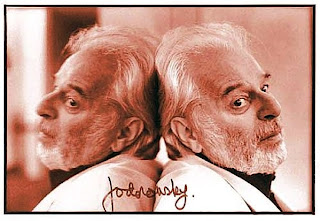
Montage Loves...Alejandro Jodorowsky - by Carmody Wilson

If Alejandro Jodorowsky can be judged by the quality of his fans, then the man is a weirdo. The disparate gaggle of supporters that at various times have come to the Chilean maestro’s support have included John Lennon and Yoko Ono, Marilyn Manson, Moebius, and Nick Nolte. He has either married these people, taken their money, or given them work, but any relationship with the eccentric director would surely cast these fan’s names up in more than just lights. As the director of such cult classic films as El Topo and The Holy Mountain, Jodorowsky’s work was always on the fringes of popular cinema, what with their metaphysical leanings, bloodied imagery and frank sexual nature. As the giver of such famous quotes as “Some directors direct with their eyes, I direct with my cojones,” Jodorowsky seemingly courted as much controversy as came natural to him through his bizarre and far-ranging interests.

Born in Iquique, Chile, in 1929, Jodorowsky showed an early interest in both performance and poetry. Published in Chile at the age of 16, he was well respected within the South American poetic community by the time he developed a talent for puppetry and mime. After joining a French theatre troupe, led by renowned mime Marcel Marceau, Jodorowsky toured Europe, writing plays and making vast connections within the artistic community. Bizarre projects in both Mexico and France followed, with Jodorowsky developing a following of students and fellow performers in the late fifties and early sixties. Jodorowsky’s eclectic mix of innovative physical theatre and spiritual mumbo-jumbo worked its way into his theatre projects, and soon El Panico, a mixture of comic-strip art, physicality and avant-garde improvisations was created. This movement added to Jodorowsky’s already impressive roster of theatrical achievements, having directed touring productions of the works of Ionesco, Beckett, and Strindberg throughout France and South America.

It was during this time of the early 1960’s that the ever-strange Jodorowsky began to dabble in the occult, relying heavily on tarot cards and mystical omens that would figure so heavily in his film work.. Wikipedia labels Jodorowsky as one of the leading practitioners of “psychomagic,”a strange combination of psychology and occultism, meant to heal mental wounds. With these beliefs, along with his chaotic, if convicted theories on live theatre, Jodorowsky cut a swathe through the more conventional theatre experiences of his time. Influenced heavily by surrealists such as Antonin Artaud, Jodorowsky pummeled his audiences with crucified chickens, topless murderesses, malodorous vaginas and personal violence.

His first feature-length film, Fando y Lis debuted in 1968, and claimed to deal with social and political issues affecting Mexico. The film had its premier in Acapulco, and worried promoters were justified in their anxiety when a riot broke out in the cinema. Based on the play by Fernando Arrabal, Fando y Lis is a complicated jumble of religious imagery, deranged sexual miscreants, road movie motifs and violence, all sorts. In short, a typical Jodorowsky outing. The principle objection Mexicans had to this incendiary film was that it had a corrupting influence on Mexico’s youth culture. Now, Jodorowsky may be no Socrates, but a wheel-chair bound woman squirting piglets out of her vagina is certainly bounds for controversy, if not death by hemlock.
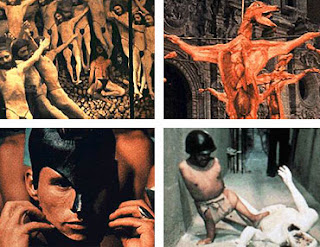
Not surprisingly, Fando y Lis was not Jodorowsky’s first foray into film. Just last year his 1957 short La Cravate was discovered in an attic in Germany, to loud cheers and jeers by the artistic community. Jodorowsky himself had long considered this work to be lost, but since its rediscovery, has spoken out in praise of this early experiment, something he is not always wont to do with work he is displeased with. But more on that later. La Cravate was filmed during Jodorowsky’s early touring days and shows how heavily influenced the young director was by his involvement with mime. Shot without sound, it shows the existential experiment of one young woman as she forces a young man and a boxer to change heads, exhibiting one of the director’s pet loves, a sort of blood soaked incorporeality, with lessons about vanity and materialism thrown in for good measure. The film was essentially forgotten, and like Fando y Lis, buried under a heap of protestations and controversy.

All was not lost for the burgeoning filmmaker, as the notoriety gained from the spiritual and artistic assault that was Fando y Lis gained him a small cult following of the best kind: rich celebrities. John Lennon and Yoko Ono, fans of the first feature, offered to help finance Jodorowsky’s next outing, and hooked the director up with the Beatles’ accountant, Allen Klein. The result was that ABKO Films produced the weirdest, most psychedelic, feral, and explicit film of its time, Jodorowsky’s heart stopper, El Topo. Heralding the beginning of the man’s tenure as “King of Midnight Movies,” El Topo chronicled the desideratic journey of one man, (accompanied by his naked son, perched atop his shoulders, naturally,) as he navigates the confused, decadent, and sinful landscape en route to defeating his enemies in cataclysmic gun battles. Part philosopher, part mystic, part murderer, all man, El Topo sways into dusty towns, rabbit-strewn hermit-holes, crumbling adobe towers, what have you, and shares with the earthy inhabitants ( who, also quite naturally, often include naked women,) either his wisdom or his bullets. A particularly bright piece of satire appears when, in a crowded church, a gun is passed around to each member of the congregation. Each time the hammer clicks in place and no bullet is disgorged, the ecstatic church-goers shout out a frenzied “it’s a miracle!” and eagerly hand the gun to their neighbour for the next test. One man points out that the bullet is a blank, and so replaces it with a real one. A hushed awe comes over the crowd as a woman is handed the gun, and cocks it back. When it is fired and the action proclaimed a miracle, the gun is then handed to a child who promptly fires the loaded chamber into his brain and dies. What this loaded piece of ridicule does is enrich the otherwise rambling, episodic and mostly ambiguous nature of El Topo with a short, sharp slap of reality. More than that, this moment is very, very funny, and in the midst of so much sex and violence, speaks to Jodorowsky’s skill as the strangest man in cinema, more satyr than satirist.


The Holy Mountain, Jodorowsky’s next film project, begins with a ritual, and ends with an enlightening practical joke. Released in 1973, the director had approached John Lennon, by now a friend as well as fan and financier, to take the starring role of the character billed only as The Thief. An even more brazen outing, The Holy Mountain details the messianic journey of the lead character as he, and other chosen disciples, culled from their respective mystical states and distant planets, are led to the path of immortality by The Alchemist, played by the maestro himself. To prepare himself and his cast, including his wife, Valerie, for the craven vortex that would be filming The Holy Mountain, Jodorowsky reputedly engaged in prolonged LSD use in combination with several ascetic and Buddhist experiences, the more to get into the mindset that the film would require. Once completed, the film debuted at Cannes, and was put out on limited release by the cautious Allen Klein. Hippies and underground art lovers loved it, but its exposure was too limited and its fans too diverse. It all but bombed.

Still, Jodorowsky’s boundless enthusiasm and energy had him already working on another project, his doomed Dune adaptation. Among the startling casting choices were Gloria Swanson, Brontis Jodorowsky, ( the director’s son,) and none other than Orson Welles. A rabid support base among the alternative art crowd had conceptual artists like H.R. Geiger and comic artist Moebius signing up to do set and costume designs, but ultimately, the people with money were in less supply and the film, though going through several incarnations on the page, was never to be produced.

Other, more banal projects followed, but the elements of critical failure, artistic disenchantment and lack of popular support led to films like Tusk(1979), Santa Sengre(1989), and The Rainbow Thief (1990),which terrifyingly stars Peter O’Toole and Omar Sharif, and was the first film that Jodorowsky directed that he did not write, all failing to get responses like those of Jodorowsky’s earlier films. These films have largely been disowned by the filmmaker, and most collectors would not include them in the cannon. Devoting his time now to creating comics and collaborating with old friend Moebius, Jodorowsky has once again hit the circuit as the first-ever DVD releases of his first four films were released earlier this year, after a protracted legal battle with ABKO. Once again, his surreal mix of spirituality, questing weirdos, bloody-mindedness and fecund sex are available for all and sundry to marvel at and decry. The man who married Marilyn Manson and out-weirded Denis Hopper is here for a whole new legion of outcasts, lovers, sinners and cinephiles. Beware.
Tuesday, 7 August 2007

Montage Loves... Jon Brion - by Emma J. Lennox


The name Jon Brion may not be well known, but his music will certainly strike a familiar chord. Anyone who's enjoyed the snow scattered beach scenes of Eternal Sunshine of the Spotless Mind will have heard 'Strings That Tie to You' perfectly intone the film's conundrum of love and loss. There is also the sublimely comic I Heart Huckabees, where Brion's 'Knock Yourself Out' accompanies Mark Wahlberg and Jason Schwartzman's attempts at existential bliss. But most notable is the collaboration with acclaimed Indie director Paul Thomas Anderson. Brion and PTA's shared affinity for the offbeat and the unusual puts emphasis on the experimental, has taken soundtracks to a new level. The two started working together on Hard Eight in 1996, continuing with Boogie Nights, 1997, Magnolia, 1999 and Punch Drunk Love, 2002. Latest project There Will Be Blood is due for release in November this year. With PTA, Brion is given freedom rarely allotted to other composers. An entity in its own right, Brion's sound is as integral to the film as its script.

A musical chameleon, Brion is a multi-skilled one man industry; a composer, a producer, and a performer, it's no surprise that Brion's formative years were surrounded by musical talent. His father directed marching bands at Yale and his mother sang in various jazz groups. Brion's siblings are also successful in their fields as a conductor and a violinist. Despite initially rebelling against a formal music education, Brion's background has given him base knowledge he's been able to riff off ever since. His natural ability to play by ear allows him to pick up any instrument which has developed a fun, improvisational style. In effect Brion is a one man jazz band with a heavy pop influence. Jazz impresario, Brad Mehldau, names him as his favourite pianist, and as a producer he is in high demand from artists working the fringes of the music industry including Aimee Mann, Rufus Wainwright, The Eels and former partner, Fiona Apple. His shy exterior and boyish looks make him an unlikely cult hero yet regular sets at Hollywood club, Largo, has 'musos' queuing round the block every Friday night. The gigs showcase Brion at his most playful; he banters with the small crowd, sometimes employing them in back up duties and interweaves musical 'in jokes' into his melodies. Demand is so strong, bootlegs have been unofficially posted online for those too far away to enjoy. However it was the chance to compose orchestral arrangements which sparked Brion's creative interest in PTA's films.

Using an eclectic palette of instruments Brion's scores transcend the boundaries of the cinema screen. Instead of fading into the background in quiet sympathy like most string variety soundtracks, Brion's resonating melodies implore the viewers' attention. It's unusual to have such an intrusive sound but it succeeds in enveloping the audience into emotions of the characters. Punch Drunk Love, where Brion's compositions is mixed with inventive design, has a vivid soundtrack to match the mesmeric visuals. The signature theme 'Here We Go' propels the narrative in a swirling, merry go round ¾ beat and identifies Barry Egan, the peculiar oddball as central to the story. “Each one of us feels a little stranded, you can't explain or understand it,” Brion sings with empathy “...amidst all the to and fro, someone can say hello, here we go.” The music's significance is used as a plot device when Egan finds an abandoned harmonium on the street. The poor, dishevelled object becomes his refuge against an intimidating world and has the magical ability to soothe the unstable Egan. Egan isn't a musician, in fact he is a lonely business man with several overbearing sisters and anger issues, but Brion's warm and inclusive melodies gives the character universal, heart felt appeal.


Another heart stopper is Eternal Sunshine's Everybody's Gotta Learn Sometime, which everyone will remember as Beck's cover of a Korgi's original. Whilst Beck performed the vocals, the eclectic chimes and strings, and mind twisting reverbs are identifiably Brion who played all the instruments and produced the track. It highlights what makes him so interesting; a gifted multi instrumentalist, with a mind for unconventional arrangements who is able to completely fade into the background. Despite the high profile Hollywood projects, Brion has remained decidedly out of focus, preferring the relative anonymity of a 'jobbing musician.' One suspects a more business savvy brain would have afforded him larger credit alongside the creative forces of Gondry and Kaufman. Yet Brion is an enabler rather than a personality and he has built his reputation on collaborations. It's meant his own projects have suffered including his only solo album to date; an independent effort with the self effacing title 'Meaningless'. There was also a pilot for TV, The Jon Brion Show, which attempted to recreate the creative chaos of the Largo gigs, but failed to get aired.

Yet Brion seems content with the versatility of a career in a distinctly Jon Brion shaped niche. As a pop artist it's hard not to fall in love with his deceptively simple melodies and passing resemblance to George Harrison in his quiet but soulful vocals. As a producer there are multi-layered depths to the idiosyncrasies he develops in a track. And as a film composer his ability to harmonise with the human condition makes him the perfect accompaniment to a quirky director's take on life. It is perhaps best that Brion stays the unseen maestro, plucking the heart strings from afar instead of imposing his ego. For Brion's compositions have a 'music box' quality; it's mysterious on the outside but delightful and surprising once opened up. Every Friday night in L.A. a small crowd cheers as Brion gently begins “You've gotta hope that's there's someone for you, as strange as you are.” Fortunately for Brion, he's not the only strange one out there.